Domain Squatting vs. Domain Investing: What Business Owners Need to Know
A seven figure domain purchase can be a smart strategic move, or a completely avoidable mistake. I have seen founders pay premium prices for domains they could likely have recovered through a UDRP complaint, and I have also seen teams waste months in domain disputes against owners who were doing legitimate domain investing from day one. The difference comes down to facts, timing, and how trademark rights intersect with domain registration behavior.
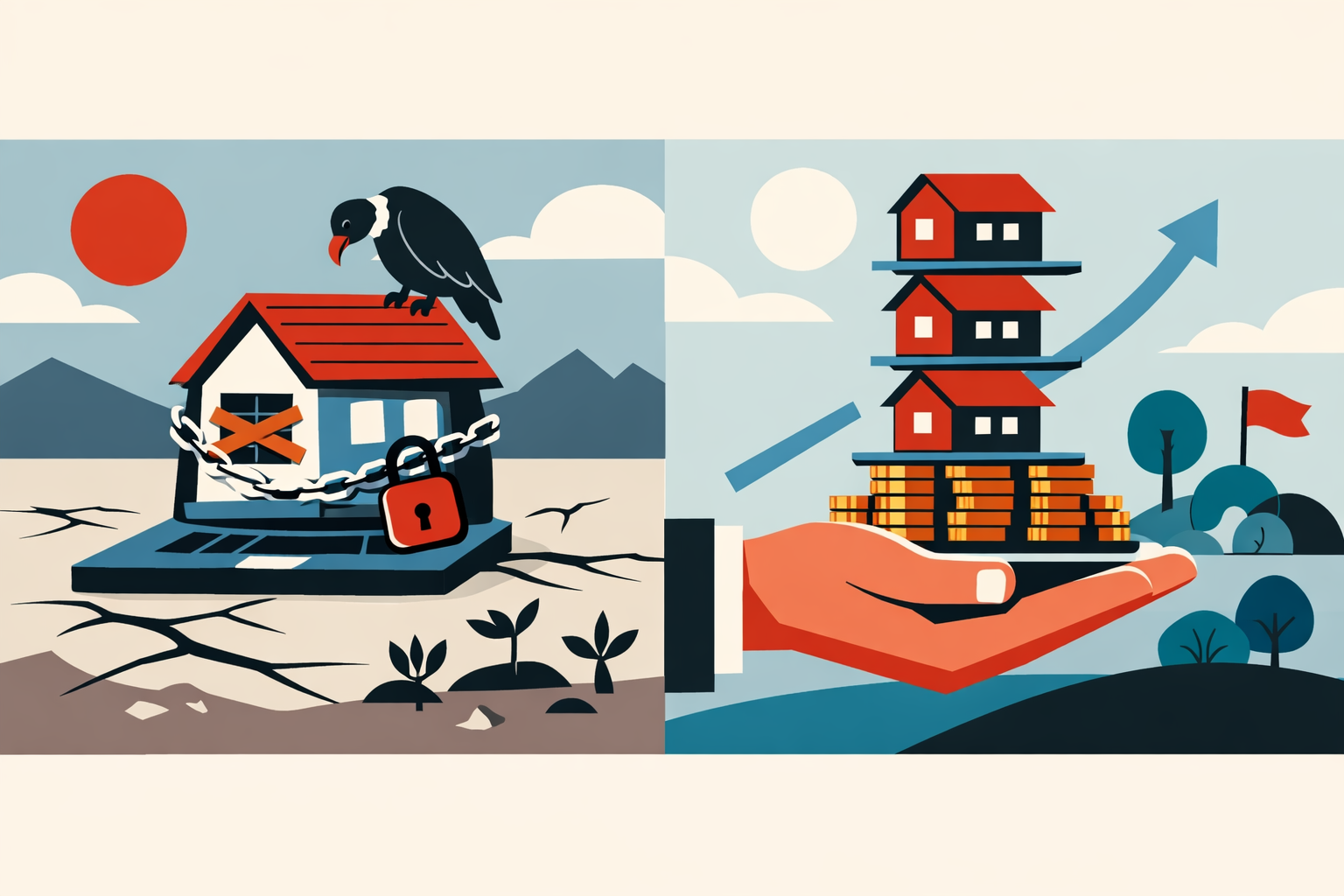
Business owners tend to lump everything into “domain squatting.” The law does not. Neither do registrars, dispute providers, or experienced buyers and sellers. Understanding the line between domain squatting (including cybersquatting) and legitimate domain investing helps you decide when to negotiate, when to file, and when to walk away.
Definitions that actually matter in practice
Domain acquisitions get messy because people argue about intent, and intent is rarely written down. The workable approach is to focus on how the name was registered, how it has been used, and what rights you can prove.
Domain investing
Domain investing is the business of acquiring domain names that are valuable because of their generic meaning, brandability, or search demand, then holding or reselling them. The investor is typically betting on language, not on a specific company’s trademark.
Examples that usually fit domain investing:
- A portfolio of dictionary words (for example, “orchard.com”, “ledger.com”, “harbor.com”) acquired because they are common terms.
- Short acronyms (three to four letters) that have many potential meanings.
- Category terms (for example, “bikeinsurance.com”) that describe a market, not a specific brand.
- Brandable invented terms that were not targeting a known mark at the time of registration.
Legitimate investors still negotiate hard. They can still price aggressively. High pricing alone does not equal cybersquatting.
Domain squatting and cybersquatting
“Domain squatting” is an umbrella phrase people use for bad behavior around domains, but the legal concept you will run into most often is cybersquatting, meaning registration and use of a domain in bad faith to profit from someone else’s trademark.
Cybersquatting patterns are usually obvious:
- Registering a domain that matches a distinctive brand name, then offering it for sale to that brand.
- Using the domain to run ads for competitors, affiliate links, or pay per click pages targeting the brand’s goods.
- Creating a site that impersonates the company, captures logins, or misleads customers.
- Registering typo variants (for example, “micorsoft.com” style typos) to intercept traffic.
If the registrant is clearly targeting your trademark, you may have legal recourse through UDRP and other options.
Key takeaway: Domain investing focuses on the inherent value of a term. Cybersquatting focuses on exploiting a trademark owner.
The legal frameworks business owners run into
Most domain disputes do not end up in court. They end up in administrative proceedings, or they settle after a credible threat.
UDRP in plain English
The Uniform Domain Name Dispute Resolution Policy (UDRP) is a global administrative process used for many generic top level domains (like .com, .net, .org) and a large number of country code domains that adopt similar policies. It is designed to be faster and cheaper than litigation.
To win a UDRP complaint, the complainant generally must prove three elements:
- The domain name is identical or confusingly similar to a trademark or service mark in which the complainant has rights.
- The registrant has no rights or legitimate interests in the domain name.
- The domain name was registered and is being used in bad faith.
The remedy is limited. You typically get transfer or cancellation. No damages.
For business owners, the third element is where many cases succeed or fail. Timing matters. If the domain predates your trademark rights, winning becomes harder unless you can show later bad faith in a way the panel will accept.
ACPA and court options
In the United States, the Anti Cybersquatting Consumer Protection Act (ACPA) allows trademark owners to sue cybersquatters in federal court. It can provide damages in addition to transfer, but it is slower and more expensive than UDRP.
Many companies start with UDRP because it is efficient, then escalate only if needed.
Registrar and marketplace policies
Separate from UDRP, registrars and marketplaces have their own rules around fraud, impersonation, and trademark abuse. Those policies can help in obvious phishing or impersonation scenarios, but they are not a substitute for a real dispute process.
The practical differences that change your strategy
Legal theory is useful, but acquisition decisions happen under time pressure. Launch dates, investor decks, and customer confusion create urgency. That urgency is exactly what bad actors count on.
Pricing is not evidence of squatting
A domain investor can ask $250,000 for a strong one word .com and still be operating legitimately. If the name is generic, short, and widely usable, a high price reflects market demand, not wrongdoing.
Conversely, a cybersquatter can ask for $2,500 and still be acting in bad faith. The price is not the test.
The registrant’s pattern matters
In domain disputes, patterns often do the talking. If a registrant holds hundreds of domains matching brands, runs ad pages targeting those brands, and has been on the losing side of prior UDRP cases, your odds improve.
If the registrant holds a portfolio of generic terms and the disputed name fits that theme, your odds drop.
Use matters more than parking
A parked page by itself is not automatically bad faith, especially for generic terms. But parking that contains ads related to your trademarked goods can support a bad faith argument.
A clean “for sale” page is also not automatically bad faith. Panels look at whether the registrant registered the name because of the trademark, then tried to sell it to the trademark owner.
The registration date is your first filter
Before you do anything else, check when the domain was registered and when it changed hands.
- If the domain was registered years before your brand existed, a cybersquatting claim is usually weak.
- If the domain was registered after your brand became known, and it matches your mark, your leverage increases.
Use a WHOIS history tool or registrar history where available. Start with a current lookup using BrandHunt’s WHOIS Lookup, then verify archived snapshots and marketplace records if the domain has been traded.
A domain’s creation date can mislead you if the name has been dropped and re registered. You need the actual acquisition timeline.
When you have legal recourse, and when you probably do not
A clean decision tree helps avoid emotional bidding wars.
Situations where a UDRP complaint is often viable
A UDRP filing tends to make sense when several of these are true:
- You own a registered trademark, or you can prove strong common law rights.
- The domain matches your mark closely (exact match, obvious misspelling, or a mark plus a descriptive term).
- The registrant acquired the domain after your rights arose, or after your brand became well known.
- The domain is used to target your customers, your industry, or your competitors.
- The registrant approached you first, especially with a message referencing your brand.
- There is evidence of a pattern of similar registrations.
If those facts line up, paying a large premium can be a self inflicted wound. At minimum, you should evaluate UDRP before you negotiate.
Situations where UDRP is usually an uphill battle
A UDRP is often weak when several of these apply:
- The domain is a dictionary word or common phrase with many meanings.
- The registrant uses the domain for a legitimate business, or has credible plans aligned with the generic meaning.
- The domain predates your trademark rights by a meaningful margin.
- Your mark is descriptive, geographically limited, or not distinctive.
- The domain is an acronym used by many entities.
If you are in this category, the practical move is negotiation, rebrand consideration, or a different extension. Filing a weak UDRP can backfire by hardening the seller’s position and burning time.
How to avoid overpaying for domains you could recover through dispute resolution
Overpayment usually happens because the buyer skips diligence, then negotiates from a position of panic. A disciplined process prevents that.
1) Separate “must have” from “nice to have” before you contact the owner
A founder who tells their team “we must have the .com” often creates a blank check scenario. If the name is truly mission critical, you still need a plan, but you should also define alternatives:
- Acceptable variants (plural, hyphen, “get”, “try”, “hq”).
- A different brand name.
- A different extension for a defined period.
If you do not define alternatives, you will overpay under pressure.
2) Verify trademark rights and dates
Pull your trademark filing date, registration date, and first use claims. If you are relying on common law rights, gather proof such as dated press, invoices, ad spend, app store pages, and customer volume.
If the domain was registered before you had rights, ask whether the registrant later acquired it. A later acquisition can reset the clock in some UDRP analyses, depending on facts.
3) Document the registrant’s use and behavior
Take screenshots of the domain content, ads, redirects, and any offer to sell. Save emails. Save headers. If there is impersonation or phishing, capture evidence immediately.
If the domain is parked, record what ads appear from your location and from a neutral location. Geo targeted ads can change what a panel sees.
4) Run a quick valuation to anchor reality
Even when a dispute is possible, you need a sense of fair market value to decide whether to buy quickly, file, or walk away.
Use BrandHunt’s Domain Appraisal as a starting point, then sanity check with comparable sales. A generic one word .com can command serious money. A trademark matching domain with no generic meaning often has little legitimate market value.
5) Do not tip your hand in the first outreach
The first email should not mention your company name if you suspect cybersquatting. A neutral broker style inquiry can surface whether the registrant is targeting you.
A typical pattern:
- Neutral inquiry: “Is the domain for sale, and if so, what price range?”
- If the response references your brand, your product, or your competitors, that can be useful evidence.
Business owners often send an email from their corporate address that says “We own the trademark and will sue.” That approach sometimes works, but it can also cause the registrant to change content, hide identity, or transfer the name to a different party.
6) Treat a sudden price spike as a signal
A domain investor prices based on market value and negotiating posture. A cybersquatter prices based on your perceived pain.
If the domain was quietly listed at $4,995 for years and jumps to $75,000 right after your funding announcement, that timing can matter.
7) Consider parallel tracks: negotiation plus UDRP prep
A common acquisition playbook is to negotiate while preparing a dispute file, without bluffing. If the seller is legitimate, you close a deal. If the seller is a bad actor, you are ready to file without starting from zero.
How UDRP actually plays out for business owners
UDRP is procedural. The details determine outcomes.
Evidence panels tend to find persuasive
Panels repeatedly look for:
- Trademark rights (registration certificates help, but common law evidence can work).
- Proof the registrant knew of your brand (press coverage, fame, direct outreach, targeted content).
- Lack of legitimate interest (no credible business use, no generic meaning, no corresponding name).
- Bad faith signals (competitor ads, phishing, impersonation, pattern of registrations).
A clean record beats emotional language. Your complaint should read like a business case with exhibits.
Common mistakes that weaken a complaint
- Filing before you have trademark rights and hoping the panel will infer them.
- Ignoring that the domain is a dictionary word.
- Overstating fame without proof.
- Treating “for sale” as automatic bad faith.
- Failing to address the domain’s registration date and chain of ownership.
Timelines and costs
UDRP timelines vary by provider, but many cases resolve in roughly 45 to 75 days from filing to decision, assuming no unusual complications. Costs depend on provider, number of domains, and whether you use counsel.
The bigger cost is opportunity cost. If the domain is blocking a product launch, you need a launch plan that does not depend on the outcome.
Domain disputes you can win without UDRP, and disputes you cannot win at all
Not every dispute belongs in UDRP. Some are simpler, some are not winnable.
Clear abuse cases where speed matters
Phishing, impersonation, and fraud should trigger immediate escalation:
- Contact the registrar with evidence.
- Contact the hosting provider.
- Contact payment processors if money is being collected.
- Consider law enforcement if customers are being harmed.
UDRP may still be appropriate, but operational containment comes first.
“They have my brand in the domain” cases that are still weak
A trademark match does not guarantee a win if:
- Your mark is descriptive and the domain is being used descriptively.
- The registrant has a legitimate business that predates your rights.
- The domain is a common term and your trademark rights are narrow.
This is where business owners burn money on disputes that were never likely to succeed.
A buyer’s checklist before you pay a premium
Premium acquisitions can be smart. Paying a premium to a cybersquatter is avoidable.
Pre purchase diligence checklist
- Confirm the registrant and registrar, using a WHOIS Lookup.
- Pull the domain’s historical use via archive tools.
- Check for prior UDRP cases involving the registrant.
- Search trademark databases for conflicting marks, including in your target markets.
- Assess whether the term is generic, descriptive, or distinctive.
- Identify whether the domain has traffic value unrelated to your brand.
- Decide whether you can prove the registrant targeted you.
Negotiation checklist
- Set a ceiling based on market comps, not on your emotions.
- Use a neutral inquiry first if cybersquatting is suspected.
- Keep communications documented and professional.
- Avoid threats you are not prepared to follow through on.
If you need name alternatives quickly
A strong alternative name can deflate a seller’s leverage. Use a systematic approach rather than random brainstorming. BrandHunt’s Domain Generator can help you explore brandable options and variants while you evaluate acquisition or UDRP.
Where business owners get trapped: three common scenarios
Real world domain disputes tend to cluster into a few patterns.
Scenario 1: You launched on a different extension, then the .com holder raises the price
This is common, and it is not automatically cybersquatting. If the .com owner held the name for years as a generic asset, they are allowed to ask market price.
Your best move is to assess whether the term is generic or brand specific. If it is generic, negotiate like an investor would. If it is brand specific and registered after your brand gained recognition, evaluate UDRP before you bid.
Scenario 2: A typo domain starts redirecting to competitor ads
Typos plus competitor monetization often supports a cybersquatting theory, especially if you have trademark rights. Capture evidence and consider a UDRP filing.
Scenario 3: A former contractor or partner registered the domain
These cases can involve contractual and ownership issues beyond UDRP. Sometimes UDRP still works, but a court claim or settlement negotiation may be more appropriate if the dispute is really about who owns the asset.
How BrandHunt approaches the decision: buy, file, or rebrand
Professional domain acquisition is about choosing the cheapest path to certainty.
Buy when the seller has legitimate rights and the domain is a strong asset
If the name is generic, short, category defining, or widely brandable, paying a premium can be rational. The domain may lower long term marketing costs, reduce confusion, and improve inbound conversion.
File when the facts support bad faith targeting
If the registrant’s conduct points to cybersquatting, a UDRP can be the fastest route to transfer. The goal is not to “win an argument.” The goal is to regain control of the name without rewarding bad behavior.
Rebrand when the domain is structurally out of reach
Some domains will never be economical, and some disputes will never be clean. A controlled rebrand early is cheaper than a dragged out fight that drains momentum.
If you want a second opinion on whether you are looking at domain investing or domain squatting, the fastest path is to gather the timeline, screenshots, and trademark details, then reach out. BrandHunt can help you evaluate acquisition versus dispute strategy and handle negotiations discreetly via Contact Us.
Closing thought: pay for value, not for intimidation
A premium domain can be worth every dollar when you are buying a legitimate asset from a legitimate holder. Paying a premium because you assume you have no options is a different story. The moment you suspect cybersquatting, pause the negotiation, document the facts, and evaluate UDRP before you wire money.
If you are already under pressure to secure a name, start with diligence and a fallback plan, then pursue the cleanest path to ownership. For teams planning a purchase or a transfer, keep the operational details tight as well, including escrow and registrar steps outlined in our Domain Transfer Guide.